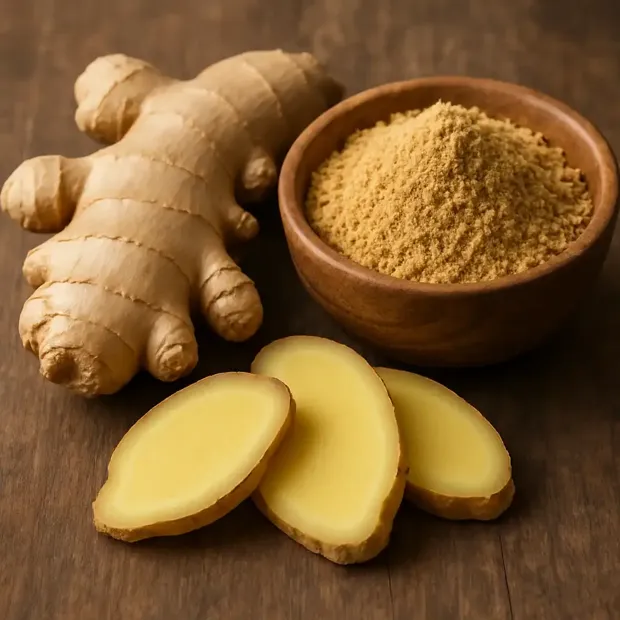
🫚 Ginger: A 5,000-Year Respiratory Remedy
Ginger (Zingiber officinale) has been used medicinally for over 5,000 years across Ayurvedic, Traditional Chinese, and Western herbal medicine traditions. While most people associate ginger with digestive relief or nausea prevention, its respiratory benefits are equally impressive — and increasingly supported by modern science. 🔬
The rhizome (root) of the ginger plant contains over 400 distinct chemical compounds, with the most important for respiratory health being gingerols (found in fresh ginger) and shogaols (concentrated in dried ginger extract). These compounds have demonstrated potent anti-inflammatory, antioxidant, bronchodilatory, and antimicrobial properties in numerous clinical studies indexed on PubMed. 📊
In BreathiZen, ginger root extract works as a key anti-inflammatory agent, complementing the mucus-clearing action of mullein leaf and the mucolytic power of bromelain. Let's explore exactly how ginger supports your respiratory system. 🫁
🔥 How Ginger Fights Airway Inflammation
Chronic low-grade inflammation in the airways is one of the most common underlying factors in breathing difficulties. Whether triggered by allergens, pollution, infections, or stress, this inflammation narrows your airways, increases mucus production, and makes every breath feel harder than it should. 😤
Ginger's gingerols and shogaols combat this inflammation through multiple pathways:
- 🧬 COX-2 Inhibition: Ginger naturally inhibits cyclooxygenase-2 (COX-2), an enzyme responsible for producing pro-inflammatory prostaglandins in your airways
- 🔬 NF-kB Modulation: Ginger modulates the NF-kB signaling pathway — a master switch for inflammatory gene expression throughout the respiratory tract
- 🛡️ Cytokine Regulation: Studies show ginger reduces levels of inflammatory cytokines like TNF-alpha and IL-6, which are elevated in chronic respiratory inflammation
- ⚡ Leukotriene Inhibition: Ginger compounds inhibit 5-lipoxygenase, reducing leukotriene production — molecules that cause airway constriction and mucus overproduction
A landmark study published in the American Journal of Respiratory Cell and Molecular Biology found that specific ginger compounds could relax airway smooth muscle cells in a dose-dependent manner — essentially acting as a natural bronchodilator. The National Institutes of Health has catalogued extensive evidence supporting ginger's anti-inflammatory respiratory effects. 🌿
🌬️ Ginger's Bronchodilatory Effects
One of the most exciting discoveries about ginger is its ability to help relax bronchial smooth muscles — the muscles that control the diameter of your airways. When these muscles contract (bronchospasm), your airways narrow, making it difficult to move air in and out of your lungs. Ginger helps prevent this constriction through several mechanisms:
- 6-Gingerol has been shown to enhance beta-agonist-induced relaxation of airway smooth muscles 💪
- 8-Gingerol directly inhibits phosphodiesterase-4D (PDE4D), an enzyme that promotes bronchial muscle contraction 🧬
- Shogaols help reduce intracellular calcium levels in smooth muscle cells, promoting relaxation and airway opening 🌊
These bronchodilatory effects mean ginger can help keep your airways open and relaxed, supporting easier, more comfortable breathing throughout the day. This is especially beneficial when combined with breathing exercises that further train your respiratory muscles. 🧘
🛡️ Antioxidant Protection for Lung Tissue
Your lungs are uniquely vulnerable to oxidative stress because they're constantly exposed to oxygen (ironically, the very thing that keeps you alive) and airborne pollutants. This oxidative burden generates free radicals that damage lung cells, accelerate aging of respiratory tissue, and contribute to chronic inflammation. 😰
Ginger's antioxidant properties help counter this damage:
- 🧪 Gingerols scavenge superoxide and hydroxyl radicals — two of the most damaging free radical species in lung tissue
- 🔬 Ginger stimulates production of your body's own antioxidant enzymes, including superoxide dismutase (SOD) and catalase
- 🛡️ The compound zingerone in ginger protects against oxidative damage from environmental toxins like cigarette smoke and air pollution
According to the World Health Organization, outdoor air pollution causes millions of premature deaths annually — making lung antioxidant support more critical than ever.
🦠 Immune Support for Respiratory Defense
Ginger doesn't just reduce inflammation — it also supports your respiratory immune system's ability to defend against pathogens:
- Fresh gingerol has demonstrated antiviral activity against common respiratory viruses in laboratory studies 🧫
- Ginger supports the function of macrophages — immune cells that patrol your airways and neutralize invading pathogens 🔬
- The warming effect of ginger promotes healthy blood circulation to respiratory tissues, enhancing nutrient delivery and immune cell transport ❤️
💧 How BreathiZen Maximizes Ginger's Respiratory Benefits
While ginger tea and fresh ginger root can provide some respiratory benefits, the concentration of active compounds in dietary ginger is relatively low. BreathiZen uses a concentrated ginger root extract that delivers standardized levels of gingerols and shogaols — far more than you'd get from a cup of ginger tea. 🍵
More importantly, BreathiZen's sublingual delivery ensures these delicate compounds bypass the harsh acidic environment of the stomach, where up to 80% of ginger's active ingredients can be degraded. By absorbing directly through the capillary-rich tissue under your tongue, the full potency of ginger's anti-inflammatory compounds reaches your bloodstream intact. ⚡
Combined with the other six ingredients in BreathiZen's formula — including green tea extract for antioxidant protection and cordyceps for oxygen enhancement — ginger root extract plays a crucial role in the comprehensive respiratory support system. Discover the full mechanism behind the formula. 🎯
📋 Practical Tips for Ginger and Respiratory Health
- 🌅 Take BreathiZen with its concentrated ginger extract first thing in the morning for all-day respiratory comfort
- 🍵 Supplement with warm ginger tea during cold weather or congestion episodes
- 🍳 Add fresh ginger to meals — stir-fries, soups, and smoothies all benefit from its flavor and health properties
- 🚰 Stay hydrated to support ginger's mucus-thinning effects
- 🧘 Combine with daily deep breathing exercises for synergistic respiratory benefits
🫁 Ready to Breathe Better?
Join 143,000+ people who transformed their respiratory health with BreathiZen's 7 plant-powered ingredients. Fast-acting sublingual spray, 60-day money-back guarantee.
🛒 Try BreathiZen Risk-Free →📦 Free Shipping · 🛡️ 60-Day Guarantee · 🇺🇸 Made in USA

Our team of health researchers and writers are dedicated to providing accurate, evidence-based information about respiratory health and natural wellness. All content is reviewed for accuracy.